

Who is KIOXIA?
KIOXIA is a Japanese memory manufacturer based in Tokyo, which emerged from the former Toshiba Memory Corporation in 2019. As early as 1987, Toshiba developed NAND flash technology, thereby laying an important foundation for modern flash memory.
Using its proprietary BiCS FLASH 3D flash memory technology, along with optimised controllers and firmware, KIOXIA develops storage solutions for a variety of applications. Its portfolio includes SSDs for desktop computers as well as high-performance drives for cloud infrastructures, AI systems and data centres.
KIOXIA SSD product portfolio: A range of solutions to meet different requirements
Not every KIOXIA SSD is designed to meet the same requirements. It is therefore advisable to categorise them into the various product ranges when making a selection.
- Retail SSDs: The EXCERIA product family is aimed at the consumer market and is suitable, amongst other things, for upgrading laptops, desktop PCs and workstations.
- Data centre SSDs: These models are designed for servers, cloud and hyperscale infrastructures. They include, amongst others, the CD9P and XD8 series.
- Enterprise SSDs: These drives support demanding enterprise applications with high requirements for performance, resilience and availability. One example is the CM9 series.
KIOXIA also introduced a separate client SSD category for the OEM (‘Original Equipment Manufacturer’) and B2B (Business to Business) sectors. This category is no longer actively marketed in the EMEA region (Europe, the Middle East and Africa).
The key factor in making a selection is therefore, above all, the demands that the respective workload places on the storage architecture.
KIOXIA EXCERIA: SSDs for laptops and workstations
The KIOXIA EXCERIA product family is aimed at the retail market and comprises various performance classes. The drives are suitable, for example, for upgrading desktop computers, laptops and performance-oriented workstations.
The standard KIOXIA EXCERIA offers an NVMe storage solution for everyday applications. Higher-performance variants, such as the KIOXIA EXCERIA Plus, are designed for larger file transfers and more demanding tasks.
The KIOXIA EXCERIA Pro is aimed at users with higher performance requirements, such as those involved in video editing, CAD applications or data-intensive development environments.
Capacities of 2 TB are also available within the product range. The models currently on offer depend on the respective product generation.
For businesses, the most powerful SSD is not automatically the most cost-effective choice. Compatibility with the existing system and the actual performance required are the decisive factors.
KIOXIA BG Series: Compact SSDs for mobile devices
In addition to the EXCERIA range, KIOXIA has developed the BG Series – a range of compact SSDs for the OEM sector. This includes the KIOXIA BG6, which is available in the space-saving M.2-2230 form factor, amongst others.
These drives have been specifically designed for compact laptops and other mobile systems. As the separate client SSD range is no longer actively marketed in EMEA, the BG Series is primarily relevant for existing devices and their technical specifications.
KIOXIA Enterprise and Data Centre NVMe SSDs: CD, CM and XD Series
KIOXIA offers a range of NVMe SSD series for professional server and storage systems. The CD9P, CM9 and XD8 product families are particularly relevant.
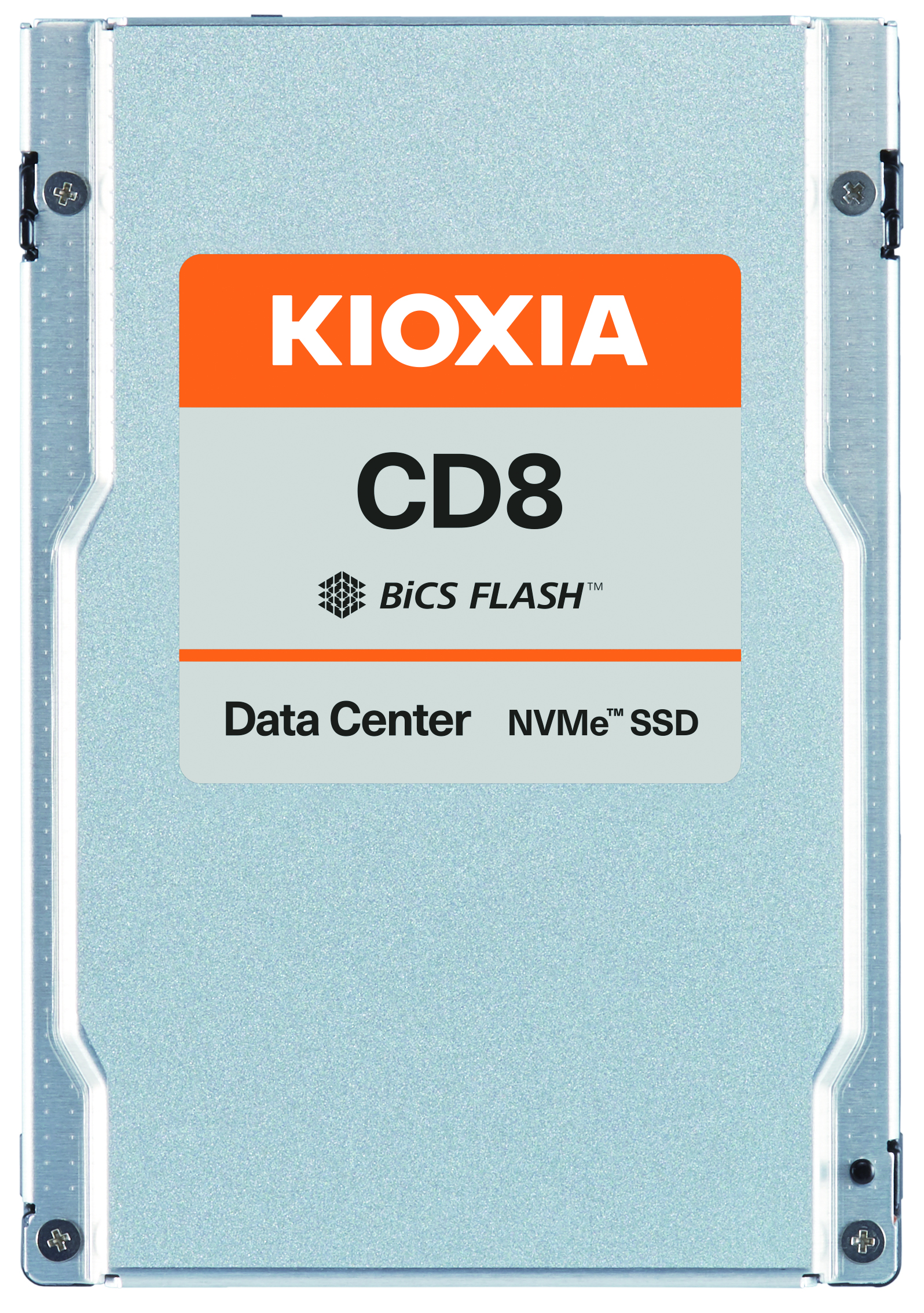
KIOXIA CD9P: Data Centre SSDs for cloud and servers
The KIOXIA CD9P series has been developed for modern data centre infrastructures. It supports PCIe 5.0 and NVMe 2.0 and is available in two variants:
- CD9P-R: A read-intensive model for predominantly read-based applications with a workload capacity of 1 DWPD.
- CD9P-V: A mixed-use model for combined read and write operations with a workload capacity of 3 DWPD.
Depending on the model, the CD9P-R achieves capacities of up to 61.44 TB and sequential read speeds of up to 14,800 MB/s. Both variants are available in various form factors, including 2.5-inch and E3.S.
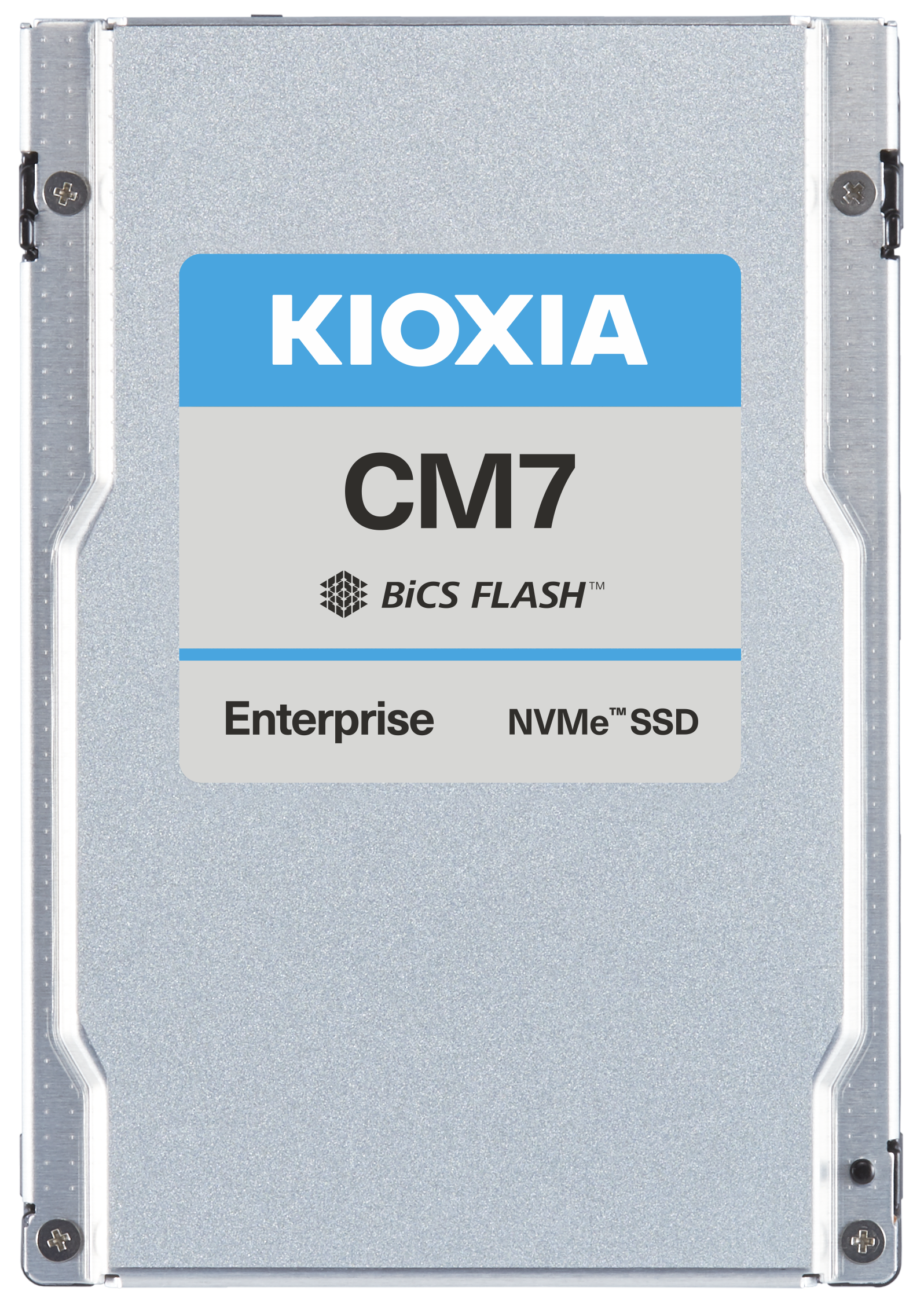
KIOXIA CM9: Enterprise SSDs for high availability
The KIOXIA CM9 series is designed for enterprise environments with particularly high demands on performance and availability.
The SSDs support PCIe 5.0, NVMe 2.0 and a dual-port design. This enables compatible systems to utilise redundant access paths.
Here too, KIOXIA distinguishes between read-intensive models with 1 DWPD and mixed-use variants with 3 DWPD.
Typical areas of application include:
- Artificial intelligence and machine learning
- Databases and business intelligence
- Virtualisation and software-defined storage
- Data warehousing and OLTP applications
Depending on the model, additional security options such as SIE, SED and FIPS SED are available.
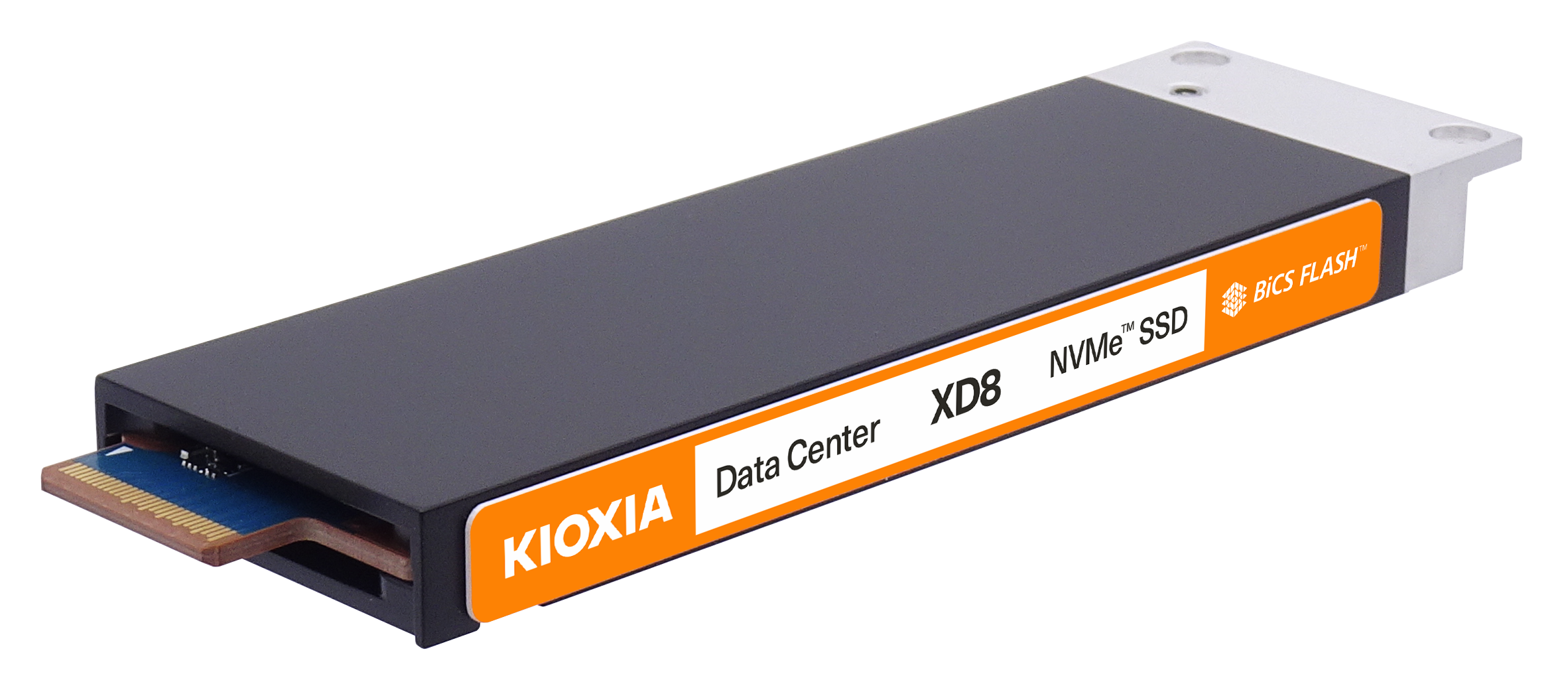
KIOXIA XD8: NVMe SSDs for hyperscale infrastructures
The KIOXIA XD8 series has been developed for cloud and hyperscale data centres. It utilises PCIe 5.0 and the compact E1.S form factor.
With sequential read speeds of up to 12,500 MB/s and up to 2.3 million random read IOPS, it is suitable for server architectures with high demands on data throughput and storage density.
As SSD product generations evolve rapidly, specific performance figures and available configurations should always be checked against the latest manufacturer’s data sheets.
What should businesses look out for when purchasing a KIOXIA SSD?
When selecting a suitable KIOXIA NVMe SSD, the following criteria are particularly important:
Intended use: Read-intensive models are suitable for predominantly read-heavy workloads. Mixed-use variants support more frequent write operations.
Interface: The PCIe generation and NVMe version must be compatible with the existing server architecture.
Form factor: M.2, 2.5-inch, E3.S and E1.S are designed for different devices and installation scenarios.
Storage capacity: The required capacity depends on data volume, growth and storage architecture.
Endurance: The DWPD rating indicates how many times the total drive capacity may be written to each day within the specified warranty period.
Availability and security: Features such as dual-port, power loss protection and hardware-based encryption can be crucial for business-critical applications.
Conclusion: Which KIOXIA SSD is the right one?
KIOXIA offers a range of storage solutions for desktop computers, servers and data centres. Whilst EXCERIA is primarily intended for upgrading laptops and workstations, the CD9P, CM9 and XD8 series are designed for professional IT infrastructures.
For businesses, workload, interface, form factor, durability and security features are particularly crucial. Careful selection helps to ensure the right storage performance and avoid unnecessary investment.
KIOXIA SSDs at it-market
At it-market, you’ll find KIOXIA SSDs to meet a range of business needs. Our experienced team will help you select compatible storage solutions and source the right hardware.
We advise you on the technical requirements of your IT infrastructure and also assist you in sourcing hard-to-find components. We also offer businesses a three-year warranty on both new and refurbished products.
FAQ: Frequently asked questions about KIOXIA SSDs
What distinguishes KIOXIA EXCERIA from enterprise SSDs?
EXCERIA is aimed at the retail market and is suitable for laptops and workstations. Enterprise SSDs are designed for professional server environments and, depending on the model, offer greater durability as well as additional availability and security features.What does DWPD mean for a KIOXIA SSD?
DWPD stands for Drive Writes Per Day and indicates how often the total storage capacity of an SSD may be written to each day within the specified warranty period.Which KIOXIA SSD is suitable for data centres?
The CD9P, CM9 and XD8 data centre and enterprise series are suitable for various data centre applications. The choice depends on the specific workload and technical requirements.What is the difference between SIE, SED and FIPS SED?
SIE refers to a function for the rapid cryptographic erasure of data. SED stands for Self-Encrypting Drive, i.e. a drive with integrated encryption. FIPS SED refers to security variants that have been certified accordingly.Are there any KIOXIA SSDs with a storage capacity of 2 TB?
Yes, KIOXIA offers SSDs with a capacity of around 2 TB across various product families. The exact capacity and availability depend on the specific series and product generation.