

What really matters when comparing
A fair comparison does not start with product names, but with requirements. First, clarify what tasks your hardware should perform. Typical tasks include access in the office, distribution and core on campus, WAN connectivity for locations, and security functions at the transition to the Internet or the cloud.
The following criteria are particularly relevant in practice for procurement:
Operation and management: How centrally do you want to configure, monitor, and automate?
Security: Which functions are mandatory, for example, firewall policies, VPN, intrusion prevention?
Scaling and performance: How many users, how many locations, what growth is realistic?
Life cycle: How do you deal with product discontinuations, spare parts, and support windows?
If you define these points clearly, it will quickly become clear whether you should prioritize a campus platform, a WAN edge solution, or a security gateway.
Cisco in the corporate environment: Strengths in campus and access
Cisco is particularly strong in the classic campus network in many companies. This refers to switches for office spaces, floor distributors, and core areas, often with high requirements for port density, Power Over Ethernet for end devices, and standardized operating procedures.
A frequently used entry point is the Cisco Catalyst 9000 family. From a purchasing perspective, it is interesting because it scales from access to distribution and core roles while offering a uniform platform concept. In many projects, Cisco is therefore a good fit if you want to modernize or consolidate a widely deployed LAN, for example, with many clients, telephony, cameras, and access points.
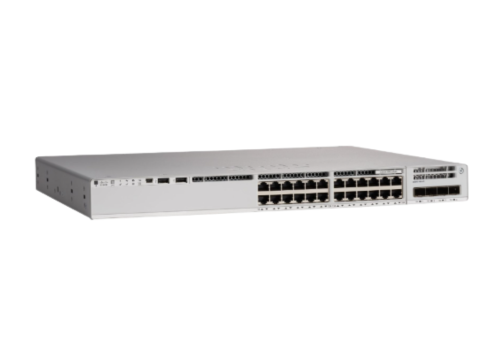
The model number is less important than the architecture. For access networks, stable stacking options, PoE budgets, sufficient uplink bandwidth, and clean segmentation are important. In distribution and core, redundancy concepts, high backplane performance, routing functions, and stable operating processes for changes and updates are important.
If your focus is on a standardized campus design, Cisco is often a very obvious choice. This is especially true if you value consistent tools for provisioning, monitoring, and policy control.
Juniper in the enterprise environment: Strengths at the network edge and in security roles
Juniper is very often used in enterprise scenarios where routing, site connectivity, and security come together. The typical area of application is the WAN edge or the gateway between internal networks, the Internet, and the cloud. In such roles, hardware must not only forward packets, but also filter, log, encrypt, and detect threats.
A common concept is gateways that combine routing and security services. This plays a major role, especially in multi-site, hybrid environments and strict security requirements. In practice, IT teams evaluate stateful firewall capabilities, VPN options such as IPsec, additional security services such as intrusion prevention, and how well policies can be managed centrally, among other things.
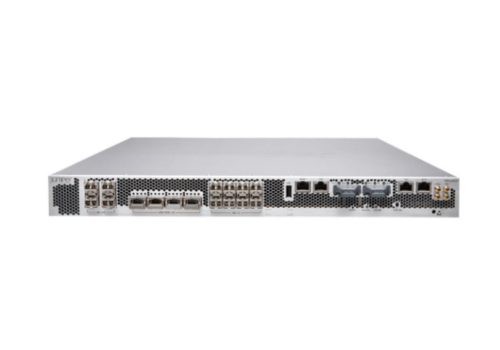
When procuring, it is crucial that throughput values are always considered in the context of the activated security functions. An appliance that is very fast in pure routing may deliver significantly less net throughput when security services are activated. Therefore, your load profile should be clear: number of simultaneous connections, encrypted traffic, expected peaks, logging requirements, and possible expansions.
If your main question is: We need a powerful gateway with security and VPN for locations or data center transitions, then Juniper Networks is particularly relevant in many cases.
Which choice fits which requirement profile?
Scenario 1: Classic office network with many end devices
If you primarily operate a stable LAN for many users, the access area is crucial to your purchase decision. Here, the number of ports, PoE, easy expandability, standardized configuration, and reliable redundancy are important factors. Cisco often excels in such environments because campus switch platforms are widely used and fit well into classic enterprise operating models.
Recommendation: First check access and distribution, define PoE requirements per floor, plan uplinks conservatively, and clarify the management strategy. If these points are in order, the manufacturer is often a secondary decision, but Cisco is often a very solid option in this profile.
Scenario 2: Site connectivity, VPN, and security at the network edge
As soon as you need to connect multiple sites, reach cloud destinations, or meet stricter security requirements, the edge role becomes more important than the pure access switch. The deciding factor here is how cleanly you can merge VPN, segmentation, security policies, and monitoring.
Recommendation: If security and WAN edge are your main areas of focus, prioritize the gateway platform. Juniper may be a particularly good fit here, as this role has traditionally been strongly addressed in its portfolio. Cisco can also cover this, but the comparison should then be based very specifically on policies, licensing models, and performance under activated security services.
Scenario 3: WLAN modernization and many mobile clients
For WLAN projects, it is worth making a clear distinction between radio planning and wired infrastructure. The manufacturer is only one part of the equation. The decisive factors are site coverage, roaming requirements, security standards such as WPA3, VLAN and authentication, and the PoE supply of the access points.
Recommendation: First define your WLAN requirements and operating concept, then decide on the product line. In a wired infrastructure, Cisco may be very suitable for campus environments, while edge and security requirements need to be evaluated separately, and Juniper may well be the better choice here.
Scenario 4: Hybrid infrastructure, data center, and cloud transitions
In hybrid environments, you often see mixed manufacturer landscapes. This is not necessarily a bad thing, as long as operation, monitoring, and responsibilities are clearly defined. Many companies combine Cisco in the LAN with Juniper at the edge because both manufacturers are often strong in these roles.
Recommendation: Decide on a role-by-role basis, not as a monoculture. If you prefer one manufacturer for operational reasons, check whether you will have to make compromises in terms of edge security or campus scaling.
Life cycle as a purchasing lever: Planning EoL and EoS correctly
A common cost factor arises not at the time of initial purchase, but during the life cycle. EoL means that a product is being discontinued and is no longer sold regularly. EoS means that support, updates, and replacement parts are phased out. From this point on, risks increase, especially when it comes to security issues.
Purchasing tip: Check support windows and plan a realistic replacement strategy in good time. Especially for core components, the remaining support period should match the planned service life. Otherwise, choosing refurbished products may be a good option.
Conclusion: Cisco or Juniper, which is better for you?
Cisco Systems is particularly attractive for many companies when the focus is on a standardized campus network with many end devices, high port density, and clear operating processes. Juniper Networks is often particularly interesting if your main requirement is at the network edge, i.e., WAN, VPN, and security gateways, where routing performance and security functions come together.
In practice, you will benefit most if you make your decision based on roles: evaluate access and campus separately from edge and security, define load profiles realistically, and plan the lifecycle carefully.
Suitable hardware and advice at IT-Market.com
If you want to procure Cisco or Juniper hardware for your project, we at IT-Market.com will support you from the initial requirements assessment to the appropriate configuration. Upon request, you will receive new or refurbished network technology with tested quality and clearly calculable service options. With the help of our team, you will find the solution that fits your network design, your budget, and your planned lifecycle.
FAQ: Juniper vs. Cisco in enterprise use
Is Cisco fundamentally better than Juniper for enterprises?
No. Cisco Systems and Juniper Networks are both suitable for enterprise use. The decisive factor is the role the hardware plays in your organization, for example, campus switching in LAN or WAN edge and security at the network edge.
For which requirements is Cisco particularly suitable?
Cisco is often a good choice if you want to build or modernize a classic campus network. Typical features include many end devices, high port density, Power over Ethernet for phones, cameras, and access points, and standardized operation in the LAN.
For which requirements is Juniper particularly suitable?
Juniper Networks is often highly rated when it comes to gateway roles, i.e., WAN connectivity, VPN, and security at the transition to the Internet or between locations. Routing performance, policy control, and security services are important here.
Can Cisco and Juniper be mixed in one network?
Yes, this is common in companies. Clear interfaces, clean routing and VLAN concepts, and monitoring that covers both worlds are important. Cisco is often seen in the LAN and Juniper at the edge of the network, but this depends on your operating concept.
Is refurbished network technology worthwhile for Cisco and Juniper?
For many company scenarios, yes, if quality assurance, testing processes, and warranty are suitable. This is particularly interesting for expanding existing environments, when budget constraints apply, or if you need a platform for a defined remaining term.
What information should I prepare before submitting a request?
Number of locations and users, required ports and PoE requirements, internet and location bandwidths, desired security functions, existing manufacturer landscape, desired term, and your schedule. This will enable us to provide a suitable recommendation more quickly.