

Briefly explained: What is the difference between a Layer-2 switch and a Layer-3 switch?
A Layer-2 switch operates at the data link layer of the OSI model. It forwards frames based on MAC addresses. Typical functions include VLANs, trunks, Spanning Tree, Quality of Service and link aggregation (bundling of multiple ports).
A Layer-3 switch combines switching with routing functions. In addition to MAC forwarding, it can route IP packets between different IP networks or VLANs. This enables inter-VLAN routing directly on the switch, rather than routing traffic via a separate router. Static routes, routing protocols, access control lists, policy-based routing (where supported) and SVI/VLAN interfaces are also frequently included.
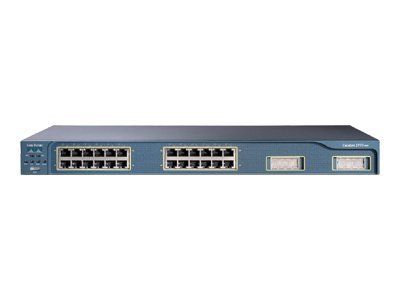
Layer-2 switch: strengths, limitations, and typical areas of application
A Layer-2 switch is usually the right choice in the access area, i.e., where end devices such as PCs, printers, VoIP phones, cameras or access points are connected. It is cost-efficient, provides high port densities, and is often easy to configure.
Limitations become particularly apparent when Layer-2 networks become too large or are extended too far. Broadcasts, unknown unicasts and certain multicast packets are distributed within a broadcast domain. The more end devices there are in a VLAN, the higher the baseline load caused by such traffic can become. Furthermore, large Layer-2 domains can complicate troubleshooting and increase the risk that faults such as loops or misconfigurations will affect larger sections of the network.
For communication between different VLANs, a pure Layer-2 switch always requires an additional device with routing capabilities, such as a router, a firewall or a Layer-3 switch. If all inter-VLAN routing is handled centrally by a single device and there is a high volume of traffic between the VLANs, this can create a bottleneck.
Typical use cases for Layer-2 switches include smaller sites with few VLANs, simple access networks, or traditional campus architectures where routing takes place in the distribution or core layer.
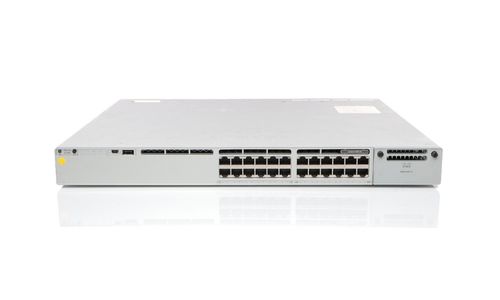
Layer-3 switch: strengths, limitations, and typical areas of application
A Layer-3 switch becomes a worthwhile option as soon as your network has many VLANs, many user groups or increasing east-west traffic – that is, communication within the site. Inter-VLAN routing on the switch keeps paths local and reduces latency.
Furthermore, Layer-3 improves scalability because broadcast domains remain smaller thanks to VLAN/subnet segmentation. You segment not only logically via VLANs, but also physically via IP subnets with clear routing boundaries. This stabilises larger environments and limits the impact of typical Layer-2 issues.
Typical Layer-3 scenarios include campus networks with many departments, environments with VoIP and video, and sites that wish to implement redundancy and fault tolerance via dynamic routing.
Layer-2 vs. Layer-3: The most important decision criteria
Size of broadcast domains
If you already have a large number of clients grouped into just a few VLANs, or if your network is set to grow significantly, Layer-3 is usually the more robust option. Multiple smaller subnets are often easier to manage than a few very large Layer-2 domains.
Proportion of inter-VLAN traffic
If your systems operate extensively across VLANs, inter-VLAN routing on the Layer-3 switch reduces path lengths and load. Where there is little inter-VLAN traffic, Layer-2 with centralised routing may suffice.
Redundancy and topology
Layer-2 designs often rely on Spanning Tree or similar mechanisms to prevent loops. This is a tried-and-tested approach, but it requires careful planning. Layer-3 designs utilise routing and can often make more active and controlled use of parallel uplinks. This makes it easier to plan redundancy, load balancing and failover in many cases.
Security and segmentation
VLANs logically separate network segments at Layer-2. With Layer-3, you can additionally implement segmentation via subnets and ACLs, thereby defining zones more clearly. For the internet and critical gateways, however, a firewall remains the standard.
Operation and Troubleshooting
Layer-3 provides clear default gateways per VLAN and defined routing paths. This aids troubleshooting in growing networks. Layer-2 is very transparent in small environments, but quickly becomes complex with many trunks and VLANs.
Important: A Layer-3 switch is not a substitute for a firewall
A Layer-3 switch can route VLANs and use ACLs to set rules, such as who is permitted to access which subnet. For many internal use cases, this is sufficient as a first step. Nevertheless, one should not confuse routing in a switch with a security solution. A firewall performs stateful inspection of connections, can recognise applications, analyse protocols and filter threats. Furthermore, aspects such as VPN, NAT, intrusion prevention or centralised logging are usually handled by the firewall or specialised security gateways.
In practice, therefore, one model has proven effective: inter-VLAN routing and local paths on the Layer-3 switch, with internet access and sensitive traffic routed via the firewall. This allows you to benefit from LAN performance without compromising security requirements.
Network design as a basis for procurement: When Layer-2 is sufficient and when Layer-3 is essential
If your on-site network is relatively small, uses only a few VLANs and most traffic is directed to the internet or a central server, a good Layer-2 setup is often sufficient. In that case, plan carefully where the routing takes place, for example on a firewall, a router or a central Layer-3 switch.
As soon as you have multiple floors, numerous departments, several Wi-Fi SSIDs, voice VLANs, guest networks and separate management networks, Layer-3 becomes worthwhile. In such environments, a Layer-3 design usually improves scalability, redundancy and fault isolation. Often, the best combination is: Layer-2 in the access layer, Layer-3 in the distribution and core layers. In larger environments, routed access can also be useful, where the access switch itself operates as a Layer-3 switch.
Conclusion: Network design rather than individual device selection
A Layer-2 switch is fast, cost-effective and often the first choice for the access layer. A Layer switch brings routing closer to users, reduces broadcast domains and makes growing networks more stable. The key factors are your expected growth, the number of VLANs, the proportion of inter-VLAN traffic and your requirements for redundancy and segmentation. Also factor in the operating model: the more VLANs, sites and services are added, the more important clear network boundaries, clean routing and a transparent set of rules become. In many cases, a hybrid approach makes the most sense, such as Layer-2 in the access layer and Layer-3 in the distribution and core layers. This keeps the network manageable whilst allowing you to integrate extensions such as additional floors, guest networks or VoIP without a fundamental over.
Suitable Layer-2 and Layer-3 switches at it-market
At it-market, you will find new and refurbished switches for access, distribution, and core with up to a 3-year warranty for B2B customers including. Our certified technicians will assist you with your selection, answer questions about VLAN design, uplinks, redundancy, and help you upgrade your existing infrastructure step by step. Contact us, our expert team will be happy to help.
FAQ: Frequently asked questions about Layer-2 and Layer-3 Switches
What is the OSI model?
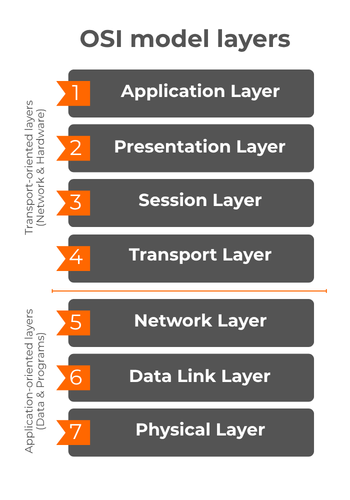
The OSI model is a reference model that divides network communication into seven layers. It helps to clearly assign technologies and sources of error. For switches, Layer-2, i.e. the security layer, and Layer-3, i.e. the network layer, are particularly relevant.What is Layer-2 switching?
Layer-2 switching describes the forwarding of data within a local network using MAC addresses. A Layer-2 switch learns which MAC address is accessible at which port and forwards frames in a targeted manner. Functions such as VLANs, trunks, and spanning tree are typically included.What is Layer-3 switching?
Layer-3 switching extends classic switching with routing functions. A Layer-3 switch can forward IP packets between different networks, for example between VLANs via Inter VLAN Routing. This allows default gateways to be located directly on the switch and data traffic to remain local, which often improves performance and stability in larger corporate networks.What is the difference between a Layer-3 switch and a firewall?
A Layer-3 switch handles routing and ensures high performance within the internal network, including the control of traffic between subnets. A firewall is responsible for security, usually operates in stateful mode and can inspect applications and detect threats. In practice, the firewall protects internet gateways and critical zones, whilst the Layer-3 switch handles internal routing, e.g. inter-VLAN routing.